
Stroke Treatment in Howrah: Warning Signs, Emergency Care and Recovery Guide
A stroke can change a life in minutes. One moment a person is talking normally, and the next their face droops, their arm goes weak, or their words come out wrong. In Howrah and across West Bengal, stroke is one of the leading causes of disability in adults, yet most families do not recognise the warning signs until it is too late.
The good news is that stroke is treatable, especially when the patient reaches a hospital fast. Modern emergency care can dissolve the clot or remove it, and planned rehabilitation can bring back movement, speech, and independence. This guide explains stroke in simple words: the warning signs, what your family should do in the first minutes, how doctors treat it, and how recovery works.
Table of Contents
- What Is a Stroke?
- BE FAST: Stroke Warning Signs
- What to Do in the First Minutes at Home
- The Golden Hour: Why Every Minute Counts
- How Doctors Diagnose a Stroke
- Stroke Treatment Options
- Recovery Timeline After a Stroke
- Physiotherapy and Speech Therapy After Stroke
- Preventing a Second Stroke
- When to See a Neurologist
- Frequently Asked Questions
What Is a Stroke?
A stroke happens when blood flow to a part of the brain is blocked or when a blood vessel in the brain bursts. Brain cells begin to die within minutes without blood and oxygen, which is why quick action matters so much.
There are two main types. An ischemic stroke happens when a clot blocks an artery supplying the brain. This is the most common type, causing about 8 out of 10 strokes. A hemorrhagic stroke happens when a blood vessel bursts and bleeds into the brain. It is less common but often more serious.
There is also a TIA, or mini stroke. The symptoms appear and then go away within minutes or hours. Many people ignore it because they feel fine again, but a TIA is a serious warning. About 1 in 3 people who have a TIA will have a full stroke later, often within days or weeks. Never ignore a mini stroke.
BE FAST: Stroke Warning Signs
Doctors use a simple memory tool called BE FAST. Every family should know it:
- B - Balance: Sudden loss of balance or coordination, feeling dizzy for no reason.
- E - Eyes: Sudden vision trouble in one or both eyes, blurred or double vision.
- F - Face: One side of the face droops or feels numb. Ask the person to smile and check if it looks uneven.
- A - Arms: One arm feels weak or numb. Ask the person to raise both arms and see if one drifts down.
- S - Speech: Speech becomes slurred, strange, or hard to understand. The person may not find the right words.
- T - Time: Time to call an ambulance immediately. Note the exact time the symptoms started.
In Bengali households, stroke symptoms are often mistaken for weakness, low pressure, or tiredness. A painless drooping face or a slurred sentence is easy to dismiss, especially in elderly parents. Do not wait to see if it gets better on its own. If you see even one of these signs, act now.

What to Do in the First Minutes at Home
What your family does before the ambulance arrives can change the outcome. Keep this checklist in mind:
- Call an ambulance at once. Do not try to drive the patient to the hospital yourself. Ambulance staff can start care on the way and alert the hospital. Lords Healthcare runs 24x7 emergency and ambulance service in Shibpur, Howrah.
- Note the exact time symptoms started. Treatment decisions depend on this. Check the clock and remember, or ask someone to write it down.
- Do NOT give food, water, or any medicine. The patient may choke, and aspirin or other tablets can make bleeding strokes worse.
- Lay the person on their side if they are vomiting or unconscious, so they do not choke.
- Loosen tight clothing around the neck and keep the person calm and still.
- Do not let them sleep it off. Stroke symptoms that fade can return worse. Every minute of delay kills more brain cells.
Keep the ambulance number saved in every family member's phone. In an emergency, call Lords Healthcare's toll-free helpline at 1800 309 0895.
The Golden Hour: Why Every Minute Counts
Doctors talk about the golden hour, the first 60 minutes after a stroke begins. Treatment given in this window gives the best chance of recovery with little or no disability.
For ischemic stroke, a clot-busting medicine called thrombolysis can dissolve the clot, but it must be given within about 4.5 hours of symptom start. That is why noting the exact time matters so much. In some cases, doctors can also physically remove the clot with a procedure called thrombectomy, which has a slightly longer window.
Roughly 2 million brain cells die every minute during a stroke. A delay of even 30 minutes can be the difference between walking out of the hospital and months of rehabilitation. This is the single most important message of this guide: do not wait, do not observe, call for help immediately.
How Doctors Diagnose a Stroke
When a stroke patient arrives at the emergency department, the team moves fast. The first step is usually a CT scan of the brain, which shows within minutes whether the stroke is caused by a clot or a bleed. This decides the entire treatment plan, because clot-busting drugs must never be given for a bleeding stroke.
An MRI scan may follow for a clearer picture of the damaged area. Blood tests check sugar, clotting, and cholesterol. An ECG test in Howrah checks the heart rhythm, because an irregular heartbeat is a common source of clots that travel to the brain. A CT scan in Shibpur near Nabanna is available round the clock at Lords Healthcare for emergency diagnosis.
Stroke Treatment Options
Treatment depends on the type of stroke:
For ischemic stroke (clot):
- Thrombolysis: clot-busting medicine given through a vein, best within 4.5 hours.
- Thrombectomy: a thin tube removes the clot from the blocked artery, done by specialists.
- Blood thinners and antiplatelet medicines to prevent new clots.
For hemorrhagic stroke (bleed):
- Medicines to control blood pressure and reduce brain swelling.
- Surgery in some cases to stop the bleeding or relieve pressure.
After the emergency, every patient needs monitoring in a stroke unit or ICU, control of blood pressure and sugar, and prevention of complications like pneumonia or blood clots in the legs. Lords Healthcare's critical care team manages this phase with 24x7 monitoring.
Recovery Timeline After a Stroke
Recovery is a journey, and every patient's path is different. But most families find it helpful to know what to expect:
First days: The medical team checks swallowing before the patient eats or drinks anything, because stroke can weaken the throat muscles. Nurses help with bed mobility and sitting up.
First weeks: Physiotherapy begins, often while still in hospital. The focus is on moving weak limbs, sitting balance, and standing. Speech therapy starts if speaking or understanding is affected.
1 to 3 months: This is the fastest phase of recovery. Regular physiotherapy builds strength and coordination. Many patients start walking with support and handling daily tasks.
3 to 6 months: Most of the brain's natural recovery happens in this window. Continued therapy pushes further gains. Families should keep the routine going even when progress feels slow.
Beyond 6 months: Improvement continues but more slowly. The focus shifts to independence, returning to work where possible, and preventing another stroke.
Patience matters. Recovery is not a straight line, and small gains add up over months.
Physiotherapy and Speech Therapy After Stroke
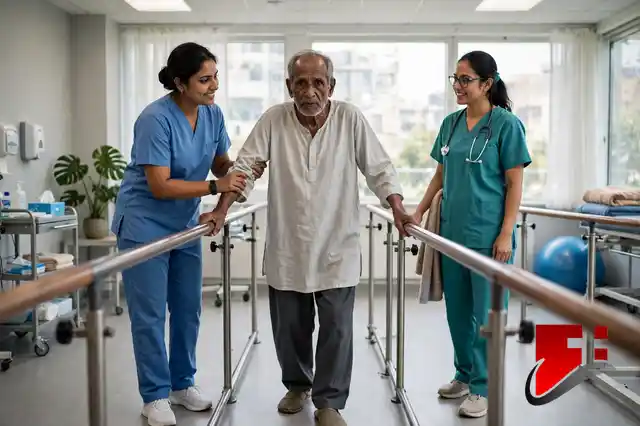
Rehabilitation is where lost abilities are rebuilt. Physiotherapy retrains weak muscles through guided exercises, starting from bed movements to walking and stair climbing. Therapists also work on balance to prevent falls, which are common after stroke.
Speech therapy helps patients who struggle to speak, find words, or swallow safely. It also helps with understanding language, which can be affected even when speech sounds normal.
Occupational therapy retrains daily skills: eating, dressing, bathing, and writing. The goal is simple: maximum independence in daily life.
At Lords Healthcare, the rehabilitation plan is made for each patient by the neurologist together with physiotherapists and speech therapists, and the family is taught how to continue exercises at home.
Preventing a Second Stroke
A first stroke raises the risk of a second one, but the risk can be cut sharply with the right steps:
- Control blood pressure. High BP is the biggest risk factor for stroke. Take medicines regularly and check BP at home.
- Control diabetes. High blood sugar damages blood vessels. Read our guide on diabetes treatment in Howrah and get your blood sugar test in Howrah done on schedule.
- Take prescribed blood thinners. Never stop them without the doctor's advice.
- Quit smoking and limit alcohol. Both sharply raise stroke risk.
- Eat the Bengali way, but lighter. Keep machh-bhaat, but cut extra salt, deep-fried snacks, and sweets. More vegetables, dal, and whole grains protect the vessels.
- Walk daily. Even 30 minutes of brisk walking helps control BP, sugar, and weight.
- Get regular health checkups. A full body checkup in Howrah once a year can catch BP, sugar, and cholesterol problems early.
- Never ignore a TIA. A mini stroke is your body's final warning. See a neurologist the same day.
When to See a Neurologist
See a neurologist urgently if you notice any BE FAST sign, even if it goes away. Book a consultation if you have high blood pressure, diabetes, heart rhythm problems, or a family history of stroke, because these raise your risk.
Dr. Ankur Banik, Consultant Neurologist at Lords Healthcare, evaluates stroke risk, manages emergency stroke care, and plans long-term recovery and prevention. The hospital's 24x7 emergency department, CT scan facility, critical care unit, and rehabilitation team work together so that stroke patients get complete care under one roof in Shibpur, Howrah.
Frequently Asked Questions
Can a stroke be cured completely?
Many patients recover well, especially with fast treatment and regular rehabilitation. Some regain full independence, while others need ongoing support. Early treatment gives the best chance of complete recovery.
What is the first thing to do if someone has a stroke at home?
Call an ambulance immediately and note the exact time symptoms started. Do not give food, water, or medicine. Lay the person on their side if vomiting. Do not drive them yourself.
How long is the treatment window for clot-busting medicine?
Thrombolysis works best within 4.5 hours of symptom start. This is why reaching the hospital fast matters more than anything else.
Is a mini stroke (TIA) dangerous?
Yes. Symptoms may vanish, but a TIA means a full stroke can follow within days or weeks. See a neurologist the same day, even if you feel fine now.
Can young people have strokes?
Yes. High blood pressure, diabetes, smoking, and heart conditions can cause stroke at younger ages too. An unhealthy lifestyle is pushing stroke risk younger every year.
How can I reduce my stroke risk?
Control BP and sugar, quit smoking, eat less salt, exercise daily, and get yearly health checkups. If you are at risk, a neurologist can make a personal prevention plan for you.
Lords Healthcare, Shibpur, Howrah
13/3, Circular 2nd Bye Lane, Kona Expressway, Shibpur, Howrah 711102
Phone: +91 82729 04444 | Toll-free: 1800 309 0895
Email: patientdesk@lordshealthcare.org
24x7 Emergency & Ambulance Service