

Thyroid Treatment in Howrah: Symptoms, Tests and Complete Care Guide
Table of Contents
- What Is the Thyroid?
- Hypothyroidism vs Hyperthyroidism
- What Causes Thyroid Problems?
- How Is Thyroid Diagnosed?
- Thyroid Treatment Options
- Diet and Daily Habits
- Common Medicine Mistakes to Avoid
- Red Flags: When to See a Doctor
- Why Choose Lords Health Care for Thyroid Treatment?
- Frequently Asked Questions
- Take Control of Your Thyroid Today
Do you feel tired all the time, even after a full night's sleep? Have you gained weight without eating more? Is your hair falling out, or are your periods irregular? Many people in Howrah live with these problems for months or years, blaming stress, age, or a busy life. Often, the real reason is a small gland in the neck called the thyroid.
Thyroid problems are one of the most common health issues in India, and women are affected far more often than men. The good news is that thyroid disorders are very treatable. With the right test, the right medicine, and regular follow-up, most people live completely normal lives. This guide explains thyroid treatment in Howrah in simple words: the symptoms to watch for, the tests that confirm it, the treatment options, and the daily habits that keep your thyroid under control.
What Is the Thyroid?
The thyroid is a small, butterfly-shaped gland at the front of your neck, just below the Adam's apple. Though it is small, it controls a lot. It makes hormones, mainly T4 and T3, that decide how fast your body burns energy. This is called your metabolism.
Think of thyroid hormones as the speed control of your body. When the thyroid makes the right amount, everything runs at the right speed: your heartbeat, your digestion, your body temperature, your mood, and your weight stay balanced. When it makes too little or too much, the whole body slows down or speeds up, and symptoms appear in many places at once.
The thyroid is controlled by the brain through another hormone called TSH (thyroid stimulating hormone). When thyroid hormone levels fall, the brain raises TSH to push the gland to work harder. When levels rise, TSH falls. That is why a TSH blood test is the first and most important thyroid test. It tells the doctor whether the gland is underactive, overactive, or working normally.
Hypothyroidism vs Hyperthyroidism
Thyroid problems fall into two main types, and their symptoms are almost opposite. Knowing the difference helps you recognise the problem early.
Hypothyroidism (underactive thyroid) means the gland makes too little hormone, so the body slows down. It is the more common type in India. Its symptoms develop slowly, which is why many people ignore them for a long time.
Common symptoms of hypothyroidism:
- Tiredness and low energy, even after rest
- Weight gain without eating more
- Feeling cold all the time, even in warm weather
- Constipation
- Dry skin and hair fall
- Puffy face and swollen hands or feet
- Slow heartbeat
- Heavy or irregular periods
- Low mood or mild depression
- Poor memory and difficulty concentrating
- Muscle weakness and joint pain
Hyperthyroidism (overactive thyroid) means the gland makes too much hormone, so the body speeds up. It is less common, but it can be more urgent.
Common symptoms of hyperthyroidism:
- Weight loss even though you are eating well
- Fast or irregular heartbeat, or palpitations
- Feeling anxious, nervous, or restless
- Trembling hands
- Sweating more than usual and feeling hot
- Frequent loose motions
- Light, scanty, or irregular periods
- Difficulty sleeping
- Bulging eyes (seen in Graves' disease, the most common cause)
- Weak muscles, especially in the arms and legs
If you notice several of these symptoms together, do not guess. A simple blood test can confirm or rule out a thyroid problem in a day.

What Causes Thyroid Problems?
The most common causes are autoimmune conditions, where the body's own immune system mistakenly attacks the thyroid gland.
Hashimoto's thyroiditis is the most common cause of hypothyroidism. The immune system slowly damages the gland, so it makes less and less hormone. It runs in families and is far more common in women. It often develops after pregnancy or around menopause.
Graves' disease is the most common cause of hyperthyroidism. The immune system stimulates the gland to make too much hormone. It can also cause the eyes to bulge and the skin on the shins to thicken.
Other causes include:
- Iodine deficiency: The thyroid needs iodine to make hormones. Iodised salt has reduced this problem, but it still occurs in some areas.
- Thyroiditis: Inflammation of the gland, often after a viral infection or after childbirth. It can cause a temporary overactive phase followed by an underactive phase.
- Thyroid nodules: Lumps in the gland. Most are harmless, but some make extra hormone, and a small number need further testing.
- Medicines: Some medicines, like amiodarone (a heart medicine) and lithium (used for mood disorders), can disturb thyroid function.
- Treatment of the thyroid itself: Surgery or radioiodine treatment for an overactive thyroid can later leave the gland underactive.
- Pituitary problems: Rarely, the brain's control of the gland fails, and TSH is not produced properly.
Age, family history, and being a woman increase the risk. If your mother or sister has a thyroid problem, you should get tested once a year, even if you feel fine.
How Is Thyroid Diagnosed?
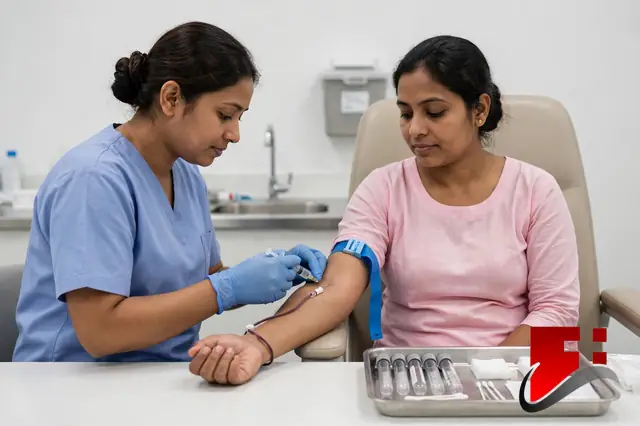
Thyroid problems are diagnosed with blood tests, and the process is simple. You do not need to be admitted, and most tests need only a small blood sample.
TSH test: The first test the doctor orders. A high TSH usually means hypothyroidism, and a low TSH usually means hyperthyroidism. It is the most sensitive single test.
T3 and T4 tests: These measure the actual thyroid hormones in the blood. Free T4 is the most useful. Together with TSH, they show how severe the problem is.
Antibody tests: Anti-TPO antibodies confirm Hashimoto's disease. TRAb antibodies confirm Graves' disease. These help the doctor understand the cause, not just the hormone levels.
Ultrasound of the neck: A painless scan that shows the size of the gland, nodules, and inflammation. It is often done when the doctor feels a lump or when antibodies are positive.
FNAC (fine needle aspiration): If a nodule looks suspicious on ultrasound, the doctor takes a tiny sample with a thin needle to check the cells. It is a quick outpatient procedure.
You can read about the tests in detail in our guide on thyroid test in Howrah. At Lords Health Care, TSH, T3, and T4 testing is done in-house, so reports are quick and your doctor can start treatment without delay.
Thyroid Treatment Options
Treatment depends on whether the gland is underactive or overactive, how severe it is, your age, and your other health conditions. There is no single treatment for everyone. Your doctor will choose the option that fits you.
1. Thyroid Hormone Tablets
This is the treatment for hypothyroidism, and it is also the most common thyroid treatment of all. The tablet is levothyroxine, a man-made copy of the T4 hormone your gland should be making. It replaces what the body is missing.
The tablet is taken once a day, first thing in the morning, on an empty stomach, with a glass of water. You should wait 30 to 60 minutes before eating or drinking tea or coffee, because food reduces how much of the medicine is absorbed. Iron and calcium tablets must be taken at least 4 hours apart from the thyroid tablet, or they will block it.
Most people with hypothyroidism need this tablet for life, because the gland usually does not recover. That is normal, and it is safe. The dose is adjusted over time based on your TSH reports. Your doctor will repeat the TSH test 6 to 8 weeks after starting or changing the dose, and then every 6 to 12 months once you are stable. Never change the dose yourself based on how you feel. The dose is decided by the blood report, not by symptoms alone.
2. Anti-Thyroid Medicines
These are the first treatment for hyperthyroidism. Medicines like carbimazole and methimazole slow the gland down and reduce hormone production. They are usually taken for 12 to 18 months.
During this time, you need regular blood tests to check that the hormone levels are coming down and that the medicine is not affecting your liver or white blood cells. Some people are cured after one course. Others relapse when the medicine is stopped, and then the doctor considers radioiodine or surgery. Beta-blocker tablets are sometimes added in the first weeks to control the fast heartbeat, trembling, and anxiety while the main medicine takes effect.
3. Radioiodine Treatment
Radioiodine is a capsule or liquid that contains a small amount of radioactive iodine. The thyroid absorbs iodine naturally, so the treatment goes straight to the gland and shrinks it. It is used for hyperthyroidism when medicines do not work, when the problem keeps coming back, or when the patient cannot take medicines for a long time.
It is a single-dose treatment in most cases, done as an outpatient. It is safe and has been used for decades. The main effect is that many people become hypothyroid afterwards and then need a daily levothyroxine tablet, which is easier to manage than an overactive gland. Radioiodine is not used during pregnancy or breastfeeding.
4. Thyroid Surgery
Surgery is needed in only a small number of cases: a very large goitre that presses on the windpipe or food pipe, a nodule that looks suspicious for cancer, or hyperthyroidism that cannot be controlled by medicines or radioiodine. The surgeon removes part or all of the gland.
After total removal, the patient needs a levothyroxine tablet for life. After partial removal, some people manage without tablets. Surgery is done by an experienced surgeon, and the patient usually goes home in a day or two. The doctor will discuss the risks and benefits with you in detail before deciding.
Your doctor may also ask you to check for related conditions. Thyroid and diabetes often travel together, so a blood sugar test is common. Thyroid problems can also raise blood pressure, so your BP is checked at every visit. You can read our guides on diabetes treatment in Howrah and hypertension treatment in Howrah to understand these links.
Diet and Daily Habits
Medicine is the main treatment, but daily habits make a real difference. No food can replace the tablet, but a good routine helps the medicine work better.
- Eat a balanced diet with enough protein, vegetables, and fruits. Extreme diets and crash weight-loss plans disturb hormones and make symptoms worse.
- Use iodised salt in normal amounts. Do not take extra iodine supplements unless your doctor advises it. Too much iodine can also harm the thyroid.
- Take your tablet correctly every day: empty stomach, with water, 30 to 60 minutes before food. Keep iron, calcium, and antacid tablets at least 4 hours away from it.
- Exercise regularly. Walking, yoga, and light strength training help with weight, mood, and energy. If you have an overactive thyroid, avoid heavy exercise until your heart rate is controlled.
- Sleep 7 to 8 hours. Poor sleep worsens tiredness and makes hormone levels harder to control.
- Manage stress. Stress does not cause thyroid disease, but it worsens symptoms and makes follow-up harder. Breathing exercises and a fixed daily routine help.
- Do not start thyroid supplements, herbal products, or high-dose biotin on your own. Biotin can disturb thyroid blood test results, and some supplements interfere with the tablet. Tell your doctor about everything you take.
Common Medicine Mistakes to Avoid
Most thyroid treatment failures are not caused by the wrong medicine. They are caused by small daily mistakes.
Stopping the tablet when you feel better. This is the most common mistake. The tablet is not a course that ends. When you stop it, the hormone level falls again within weeks, and symptoms return. If you feel well, it means the medicine is working, not that you are cured.
Taking the tablet with food, tea, or coffee. Food and tea reduce absorption by up to half. The tablet must be taken on an empty stomach with plain water.
Missing doses often. A missed dose now and then is not dangerous. Take it as soon as you remember on the same day. But if you miss doses every week, your TSH will never settle, and the doctor cannot find the right dose for you.
Taking an extra tablet to make up for a missed one. Do not double the dose. Take one tablet a day, and tell your doctor if you miss doses often so the plan can be adjusted.
Changing the dose yourself. Some people increase the dose to lose weight faster. This is dangerous. Too much thyroid hormone causes a fast heartbeat, bone thinning, and heart rhythm problems.
Skipping follow-up blood tests. You may feel fine while your TSH is too high or too low. The blood test is the only way to know the dose is right. Once stable, a test every 6 to 12 months is enough.
Red Flags: When to See a Doctor
Most thyroid problems develop slowly, but some situations need urgent care. See a doctor at once, or go to the emergency department, if you notice:
- A very fast or irregular heartbeat, chest pain, or breathlessness
- Rapid, unexplained weight loss with fever, agitation, and a fast pulse (this can be a thyroid storm, a rare emergency of overactive thyroid)
- Extreme drowsiness, confusion, or very low body temperature (a rare emergency of severe hypothyroidism)
- A neck swelling that grows quickly, or difficulty swallowing or breathing
- Severe vomiting, diarrhoea, and dehydration along with thyroid symptoms
Also book a checkup soon if you have several thyroid symptoms together, if a family member has a thyroid problem, if you are planning a pregnancy, or if you have diabetes or high blood pressure and have never been tested for thyroid. Thyroid problems in pregnancy need special care, because uncontrolled thyroid affects both the mother and the baby. A TSH test before and during pregnancy is simple and important.
Why Choose Lords Health Care for Thyroid Treatment?
Lords Health Care in Shibpur, Howrah, offers complete thyroid care under one roof. The medicine department is led by Dr. Sudip Banerjee, a Medicine Specialist with 14 to 17 years of experience, who manages thyroid disorders alongside diabetes, hypertension, and other long-term conditions. Because thyroid, diabetes, and blood pressure often occur together, one specialist who understands all three gives you better, safer care.
The hospital has in-house testing for TSH, T3, and T4, so you do not wait days for reports. Ultrasound, ECG, and full body checkup facilities are available in the same building, so related problems are found and treated together. You can read about the checkup in our guide on full body checkup in Shibpur, and about heart monitoring in our guide on ECG test in Howrah.
Lords Health Care is ISO 9001:2015 and NABH certified, which means its systems for patient safety and quality of care are independently checked. For thyroid patients, the benefit is simple: a proper diagnosis, the right dose decided by blood reports, clear instructions on how to take the tablet, and regular follow-up, with 24x7 emergency care if a problem becomes urgent.
Frequently Asked Questions
Can thyroid be cured completely?
It depends on the type. Hypothyroidism is usually a lifelong condition, but it is fully controlled with one tablet a day, and most people live completely normal lives. Hyperthyroidism can sometimes be cured with radioiodine or surgery, but many people become hypothyroid afterwards and then need a daily tablet. In both cases, the goal is the same: normal hormone levels and no symptoms.
Will I need thyroid medicine for life?
Most people with hypothyroidism need levothyroxine for life, because the gland rarely recovers. The dose may change over the years as your age, weight, and other medicines change, which is why regular TSH tests matter. A small number of people with temporary thyroiditis recover and can stop the tablet, but your doctor will decide this only from blood reports.
Can thyroid problems affect pregnancy?
Yes, and this is important. Uncontrolled thyroid in pregnancy increases the risk of miscarriage, premature birth, and low birth weight, and it can affect the baby's brain development. The good news is that with proper treatment and regular TSH monitoring, most women with thyroid problems have healthy pregnancies. If you are planning a pregnancy or are already pregnant, tell your doctor and get your TSH checked.
Does thyroid cause weight gain?
Hypothyroidism can cause modest weight gain, usually 2 to 5 kg, because the body burns energy more slowly and retains water. But it is rarely the only cause of large weight gain. The tablet corrects the hormone level, and the extra weight usually comes off slowly with a balanced diet and regular exercise. If you are taking the right dose and still gaining weight, your doctor will look for other causes.
How often should I get my thyroid tested?
After starting or changing a dose, a TSH test is done after 6 to 8 weeks. Once your levels are stable on a fixed dose, a test every 6 to 12 months is enough. You need a test sooner if your symptoms change, if you start a new medicine, or if you become pregnant. Never adjust the dose without a fresh report.
Take Control of Your Thyroid Today
Thyroid problems are common, but they are not something you have to live with silently. Tiredness, weight change, hair fall, and irregular periods are not just a part of life. They are signals worth checking. One blood test can give you the answer, and one tablet a day can give you your energy back.
If you are in Howrah and have these symptoms, or if a family member has a thyroid problem, visit the medicine department at Lords Health Care. Our specialists will test your thyroid, explain your reports in simple words, fix the right dose, and follow up with you until your levels are steady. Your thyroid is small, but getting it right changes how you feel every single day.
Lords Health Care
13/3, Circular 2nd Bye Lane, Kona Expressway, Shibpur, Howrah - 711102 (Near Nabanna)
Phone: +91-8272904444 | Toll-Free: 18003090895
Website: www.lordshealthcare.org
Book your thyroid checkup today and take the first step toward steady energy and better health.
Related Articles
View all →


Latest Posts