
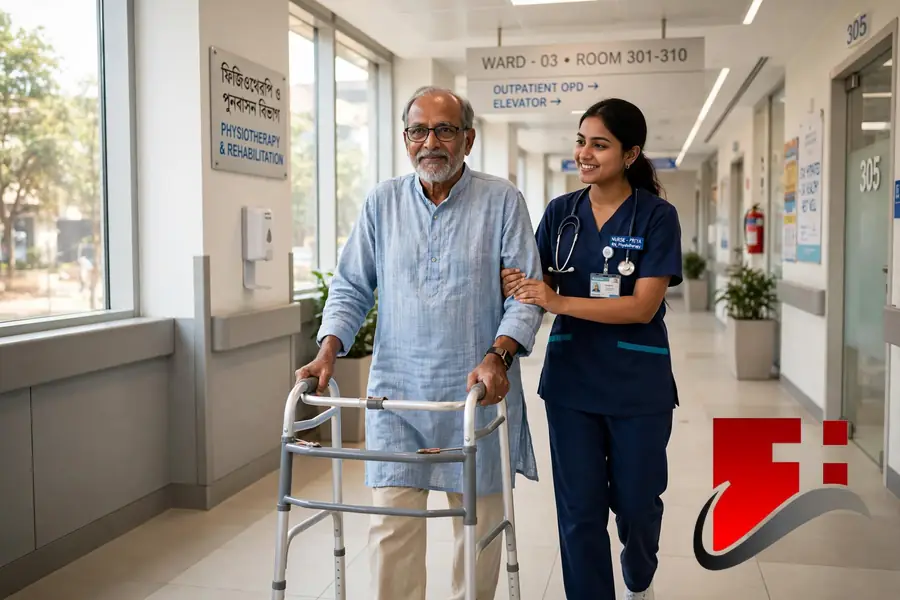
Knee Replacement in Howrah: Cost, Types, Recovery and a Complete Patient Guide
If knee pain is stopping you from walking, climbing stairs, or even standing in the kitchen, you are not alone. Thousands of people in Howrah live with severe knee pain for years, thinking surgery is risky or only for the very old. The truth is simple: a knee replacement in Howrah today is a common, safe, and well-planned surgery that can give you back a pain-free, active life.
In this guide, we explain everything in easy words: who needs this surgery, the types of knee replacement, the cost in Howrah, what happens on the day of surgery, and how recovery goes week by week.
What Is a Knee Replacement?
Your knee joint works like a hinge. Over the years, the smooth covering of the joint, called cartilage, wears out. When that happens, the bones rub against each other. This rubbing causes pain, swelling, and stiffness. This condition is called osteoarthritis, and it is the most common reason for knee replacement.
In a knee replacement surgery, the surgeon removes the damaged surfaces of the joint and fixes smooth artificial parts made of metal and high-grade plastic. These parts work like a new joint. The knee can bend and move again, without the bone-on-bone pain.
Knee replacement is also called knee arthroplasty. It does not replace your whole leg or your whole knee bone. Only the damaged joint surfaces are changed.
Who Needs a Knee Replacement?
Not every knee pain needs surgery. Doctors first try medicines, physiotherapy, and sometimes injections. Surgery is advised when those treatments stop working. You may need a knee replacement if:
- Knee pain stays with you all day, even when you are resting or sleeping
- Walking even a short distance has become difficult
- Climbing stairs, getting up from a chair, or using an Indian-style toilet is painful
- Medicines and physiotherapy no longer give relief
- Your legs are slowly bending into a bow shape or knock-knee shape
- X-rays show severe joint damage with almost no cartilage left
There is no fixed age limit for this surgery. Most patients are between 50 and 70 years old, but the decision depends on your pain, your joint damage, and your general health, not your age alone. People with rheumatoid arthritis or an old knee injury can also develop this problem at a younger age.
Types of Knee Replacement
Total knee replacement
This is the most common type. All three parts of the knee joint are replaced with artificial parts. It is the right choice when the damage is spread across the whole joint.
Partial knee replacement
If only one part of your knee is damaged, only that part is replaced. This is a smaller surgery, the cut is smaller, and recovery is usually faster. It suits younger patients with limited damage.
Both knees together (bilateral)
Some patients have severe pain in both knees. If your health allows it, both knees can be replaced in the same sitting. This means one hospital stay, one recovery period, and a lower total cost than two separate surgeries.
Your surgeon will study your X-rays and examine your knee before suggesting the right type for you.
Knee Replacement Cost in Howrah
This is the first question most families ask, so here is an honest answer. In private hospitals in Howrah and Kolkata, the cost of knee replacement for one knee usually ranges from about ₹1.5 lakh to ₹3.5 lakh for most patients. Large corporate hospitals with premium rooms and robotic systems can charge ₹4 lakh to ₹6 lakh. If both knees are done together, the total is commonly ₹3 lakh to ₹5 lakh, which is less than double, because the operation theatre, hospital stay, and many charges are shared.
The final cost depends on:
- The implant: Indian or imported brand, standard or special design. This is the biggest factor.
- The type of surgery: total, partial, or both knees together
- Your room type: general ward, twin sharing, or single room
- The surgeon’s experience and fees
- Your health condition: diabetes, heart problems, or other issues may need extra tests, care, or ICU support
- Hospital stay, medicines, and physiotherapy after surgery
Many insurance policies cover knee replacement, because it is a medical need and not a cosmetic surgery. But waiting periods and limits differ from policy to policy. Patients under schemes like Swasthya Sathi should also check their eligibility. The safest step is to bring your reports and policy papers and ask the hospital desk for a clear written estimate before you decide.
Please note: prices change with time and with your condition. Treat the figures above as a guide, not a final quote.
What Happens Before and During the Surgery
Before surgery, your doctor will do blood tests, an ECG, X-rays, and other checks to make sure you are fit. If you have diabetes or blood pressure, these should be under control first. You may also be asked to stop some medicines, like blood thinners, a few days before.
The surgery itself usually takes 1 to 2 hours. Anaesthesia is mostly given in the lower back (spinal), so you feel no pain during the operation, though general anaesthesia is also used in some cases. After surgery, you will stay in the hospital for about 3 to 5 days. Most patients stand and take a few steps with a walker on the same day or the next day. This early walking is very important for a fast recovery.
Recovery Timeline, Week by Week
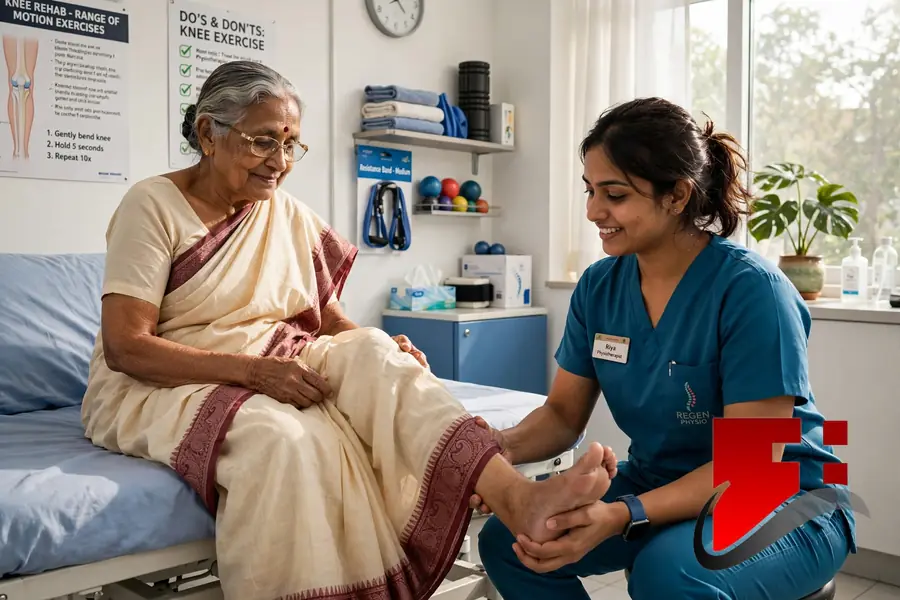
Recovery is a journey, and physiotherapy is the key to it. Here is what most patients can expect:
Day 1 to 2: You stand and walk a few steps with a walker. The physiotherapist starts gentle knee bending exercises.
Week 1 to 2: You walk at home with support. Stitches are removed around day 10 to 14. Pain is controlled with medicines and slowly reduces.
Week 2 to 4: Walking improves. Most patients climb stairs with support. Daily physiotherapy continues, at the hospital or at home.
Week 4 to 6: Many patients shift from a walker to a stick, or walk without support for short distances. Stairs become easier.
Around week 6: Driving is usually possible once knee bending and control are good, after your surgeon confirms it.
6 to 12 weeks: Most daily activities feel normal again: walking, light household work, and short outings.
3 to 6 months: Full recovery of strength and confidence. Some people take up to a year to feel completely natural with the new knee.
Every patient heals at a different speed. Regular exercise, as advised, matters more than rest. Too much rest makes the knee stiff.
How Long Does the New Knee Last?
Modern knee implants usually last 15 to 20 years, and many last even longer. Most patients, around 9 out of 10, get major relief from pain and return to walking, stairs, and light activities comfortably. Heavy running and high-impact sports are not advised, because they wear the implant faster. For most people in their 50s, 60s, and 70s, one surgery serves them well for the rest of their active life.
Are There Any Risks?
Like any surgery, knee replacement has some risks: infection, blood clots, stiffness, or injury to nearby nerves or blood vessels. These are uncommon, and hospitals take many steps to prevent them, such as sterile operation theatres, preventive medicines, and early walking after surgery. Choosing an experienced surgical team and following physiotherapy advice carefully lowers the risk a lot. Your doctor will explain the risks in your specific case before the surgery.
Can You Delay or Avoid the Surgery?
In the early stage, yes. Physiotherapy, weight control, the right medicines, walking aids, and joint injections can control pain for months or even years. But once the cartilage is fully worn out, no medicine can grow it back. Delaying too long can make the bones deform more, weaken your muscles, and make both the surgery and recovery harder. If pain is ruling your daily life, it is better to meet an orthopaedic doctor and understand your options clearly.
Knee Replacement in Howrah at Lords Health Care
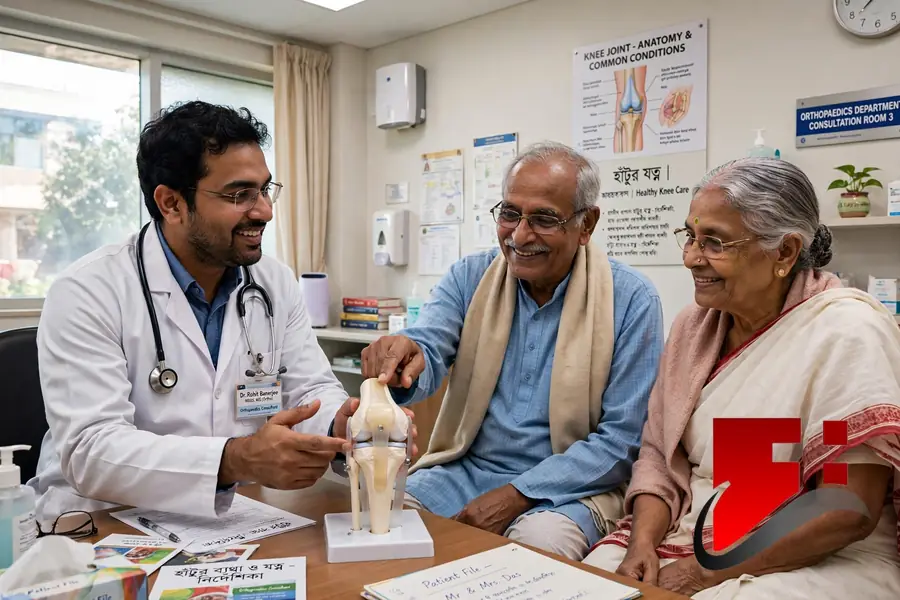
Lords Health Care is a multispeciality hospital in Shibpur, Howrah, near Nabanna and the Kona Expressway. For joint problems, you get complete care under one roof: orthopaedic consultation, digital X-ray and tests, surgery, and physiotherapy-led rehabilitation after surgery. Our team first checks whether you truly need surgery. If medicines and physiotherapy can help you, we will tell you that honestly. If surgery is the right step, we plan it with full preparation and guide you through recovery, step by step.
To book an appointment or ask about the cost for your case, call us on +91 82729 04444 or our toll-free number 18003090895.
Address: 13/3, Circular 2nd Bye Lane, Kona Expressway, Shibpur, Howrah – 711102 (Near Nabanna)
Frequently Asked Questions
How much does a knee replacement cost in Howrah?
For most patients, one knee costs about ₹1.5 lakh to ₹3.5 lakh in private hospitals in the Howrah and Kolkata area. The exact cost depends on the implant, surgery type, room, and your health condition. Ask for a written estimate before surgery.
When can I walk after knee replacement surgery?
Most patients stand and walk with a walker on the same day or the next day after surgery. Within 4 to 6 weeks, many walk with little or no support.
Is knee replacement very painful?
Pain is highest in the first 4 to 5 days and is controlled with medicines. It reduces steadily after that. Physiotherapy may feel uncomfortable in the beginning, but it is the fastest way to get your knee moving again.
How long will I stay in the hospital?
Usually 3 to 5 days. It depends on your recovery and your general health.
Can both knees be replaced together?
Yes, if you are medically fit. Doing both knees in one sitting means one hospital stay and one recovery period, and it usually costs less than two separate surgeries.
Does insurance cover knee replacement?
Most health insurance policies cover it, but waiting periods and limits vary. Check your policy and ask the hospital desk to confirm before admission.
Do not let knee pain decide how you live. Meet our orthopaedic team at Lords Health Care, understand your reports, and take the right step with full information. Call +91 82729 04444 or 18003090895 to book your consultation today.
Related Articles
View all →
Affordable CT Scans at Lords Health Care: Quality Diagnosis Without the High Cost In 2025

Don’t Ignore These 7 Signs You Need a Chest and Respiratory Specialist in Howrah